
How to Capture a Sense of Place in 5 Photos: An Explainer for Travel Storytellers
You know how it goes. You come home with four hundred photographs, and not one of them explains what the place was actually like. The light was extraordinary, the food was extraordinary, and the pictures sit in a folder like a stack of postcards that could have been taken anywhere.
What's missing usually isn't technique. It's structure. A single image can be beautiful, but it can't be informative on its own. Five images can. Five is enough to show someone who wasn't there how the air felt, who lived on that street, what the walls were made of, and what it was like to leave.
The rule that makes it work is simple: each frame gets one job, and no two frames do the same job. Atmosphere, context, people, texture, and an ending. Here's how to shoot each one.
Frame One: An Establishing Shot That Isn't a Postcard
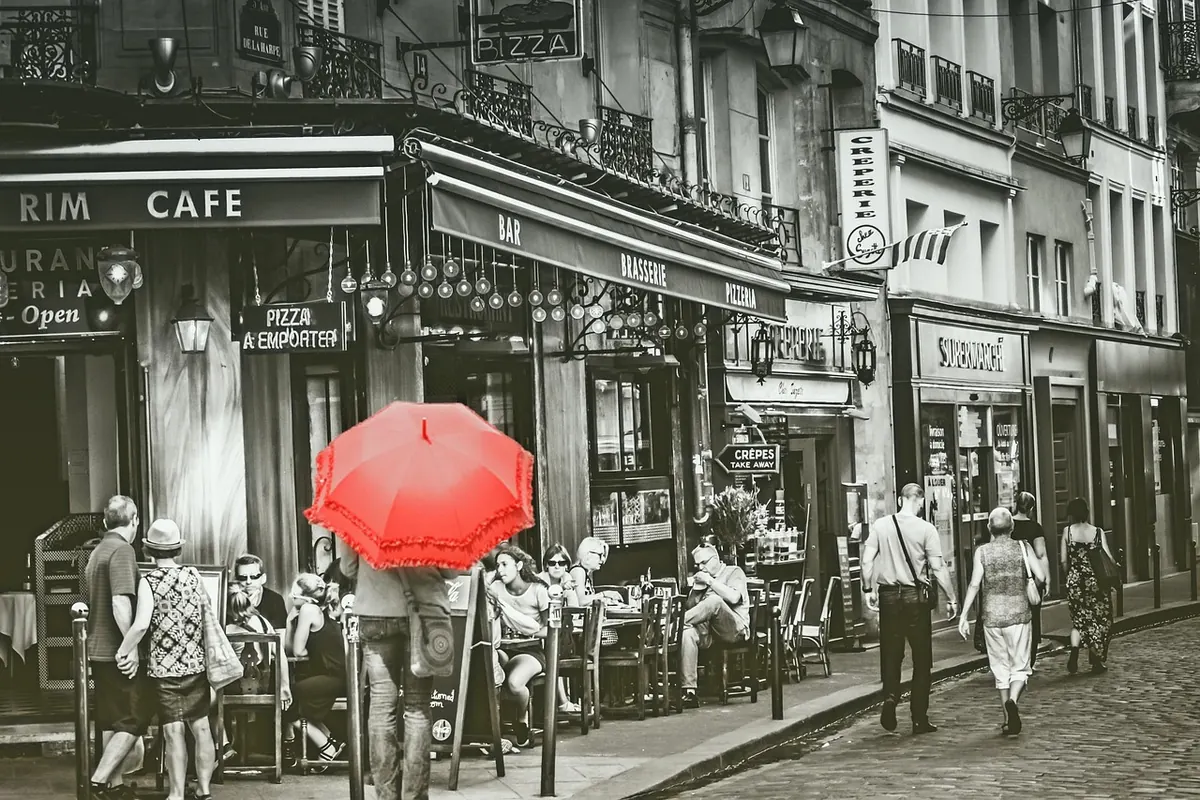
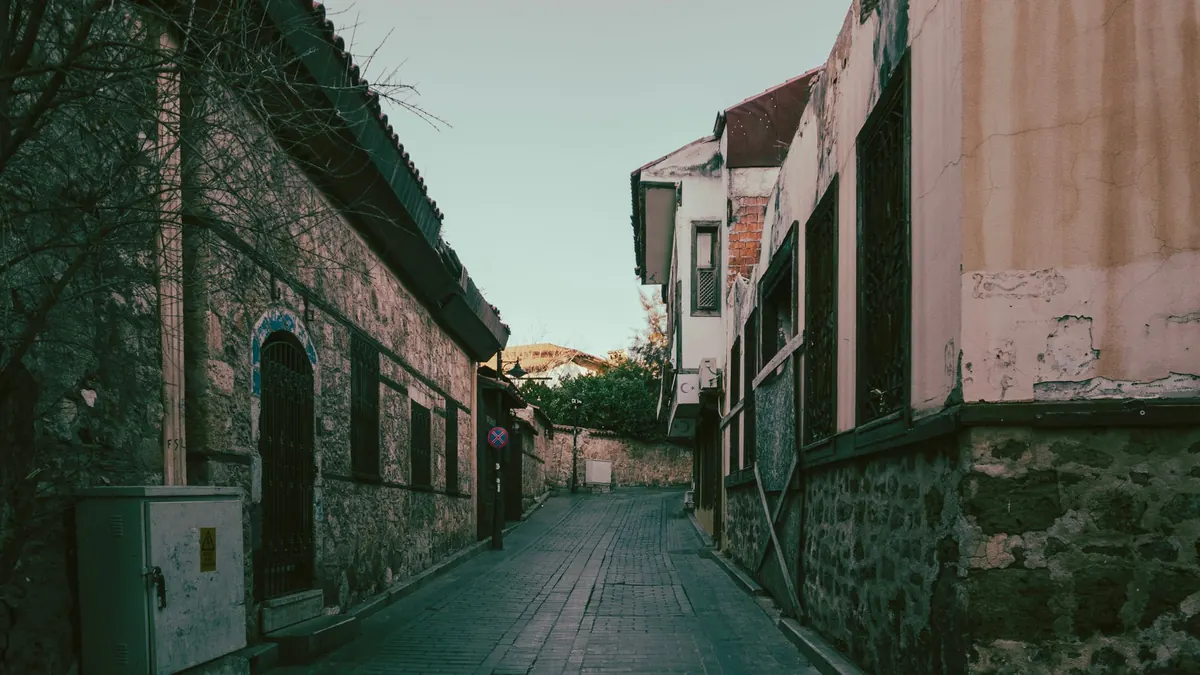
The first image answers a basic question — where am I? Not which country; the viewer will work that out. What kind of place is this? A street of balconies and laundry. A harbour with a diesel sheen on the water. A square where the café tables are still stacked from the night before.
The temptation is the obvious angle: the view from the viewpoint, at the obvious hour, with nobody in it. Resist for thirty seconds. Walk twenty metres to the left, climb one flight of stairs, or shoot from behind a chair, a doorway, a tree. Foreground gives the frame depth, and depth is what makes a flat image feel like somewhere you could walk into.
Worth including
- One element that locates the place without spelling it out: a street sign, a scooter, a bus number.
- A foreground object close enough to be slightly out of focus.
- Evidence of people, even if there are none in the frame — washing, deliveries, chairs pulled out.
Frame Two: Scale, or Where You Actually Are
Details can make a sequence feel like a shoebox. The second frame pulls back until the town, the valley or the coastline becomes a shape rather than a subject. This is the frame that explains distance, weather, and how the place sits in the world around it.
Put a person in it, small, doing something ordinary — walking a dog, pushing a bike, hauling a crate up a ramp. That figure does two jobs at once. It gives the viewer a unit of measurement, and it shows how the place is used. A wide lens helps here; so does getting your horizon straight and keeping your own shadow out of the bottom of the frame.
Frame Three: People, at a Distance They'd Accept
This is the frame most travellers skip, and the one a sequence misses most when it's gone. You don't need faces. Activity reads better than a portrait: hands kneading dough, a man hosing down the pavement at seven in the morning, a woman counting coins into a palm, a child carrying a baguette longer than his arm. Hands and posture tell you more about a working street than a smile does.
Get close enough that the person is unmistakably the subject, which usually means a few paces, not across the road. Use a lens around 35mm or 50mm equivalent and open up a little so the background softens without turning to soup. Then wait. Gestures last about a second and a half, so watch the hands rather than the face and be ready before anything happens.
And ask, if you're close and the person is recognisable. It costs nothing, it often leads to a better frame, and if the answer is no, that's the end of it. Thank them and move on.
Frame Four: Texture, Close Enough to Touch
Fill the frame with a surface. Wet cobbles, salt dried on a window, flour dusted across a wooden counter, plaster peeling back to brick, condensation sliding down a cold glass. Most cameras won't focus closer than an arm's length without a macro lens, so work at that limit, use a phone, or crop in later.
Texture is how a photograph invites the senses in. Nobody can smell your picture, but a close-up of wet stone and rope makes them try. Light matters more here than anywhere else in the sequence: side light, raking across a wall, reveals every ridge and crack. Light from behind your shoulder flattens the same wall into wallpaper.
Frame Five: The Frame You Leave On
The last image isn't a summary. It's the opposite — the shot that lingers after the story has already happened. Late light on an empty table. Chairs stacked against a wall. A doorway at dusk with the light on inside. The bus pulling out with someone's arm still out of the window.
Keep it quiet, and leave one thing unresolved. No portrait, no grand view; both belong earlier. This frame is where you let the sequence stop without announcing that it's finished.
Putting the Five in Order
- Cull by job, not by beauty. Go through the take and pick the strongest candidate for each of the five roles. If you have three good texture frames, keep one. The other two belong in a different sequence.
- Check the rhythm. Wide, wide, close, close, wide gets monotonous. Establishing, scale, people, texture, exit gives the eye somewhere to travel. If two neighbouring frames feel similar, swap one out.
- Look for echoes. A red door in the first frame and a red shirt in the fourth tie the set together without a word of caption. Repeated shapes, weather and colour do the same work.
- Caption plainly. Place, month, one sentence of description. Not a poem. The pictures are already doing the atmosphere.
- Sleep on it. Whatever annoyed you about a frame at midnight will still annoy you in the morning, and that's the one to cut.
If a frame is weak, don't replace it with two. Five is a discipline. It forces you to decide what the place was actually about, which is the same question you were trying to answer when you got on the plane.
One Street, One Afternoon
Next time you have a free afternoon somewhere unfamiliar, give yourself one street and a limit of thirty-six frames. Shoot the five jobs deliberately and in order: the arrival, the wide view, the working hands, the surface, the exit. Then at home, choose the five that carry the most, and write one sentence under each — what it shows, why you kept it. If you can't write the sentence, the frame isn't doing its job yet.
Do this twice and the structure stops being a checklist. You'll start seeing the five frames before you raise the camera, and the rest of the afternoon is yours to stand around and watch a street be itself.
Photo: Ayşegül Aytören / Pexels